
How Does Gold Vermeil Jewellery Wholesale Work?
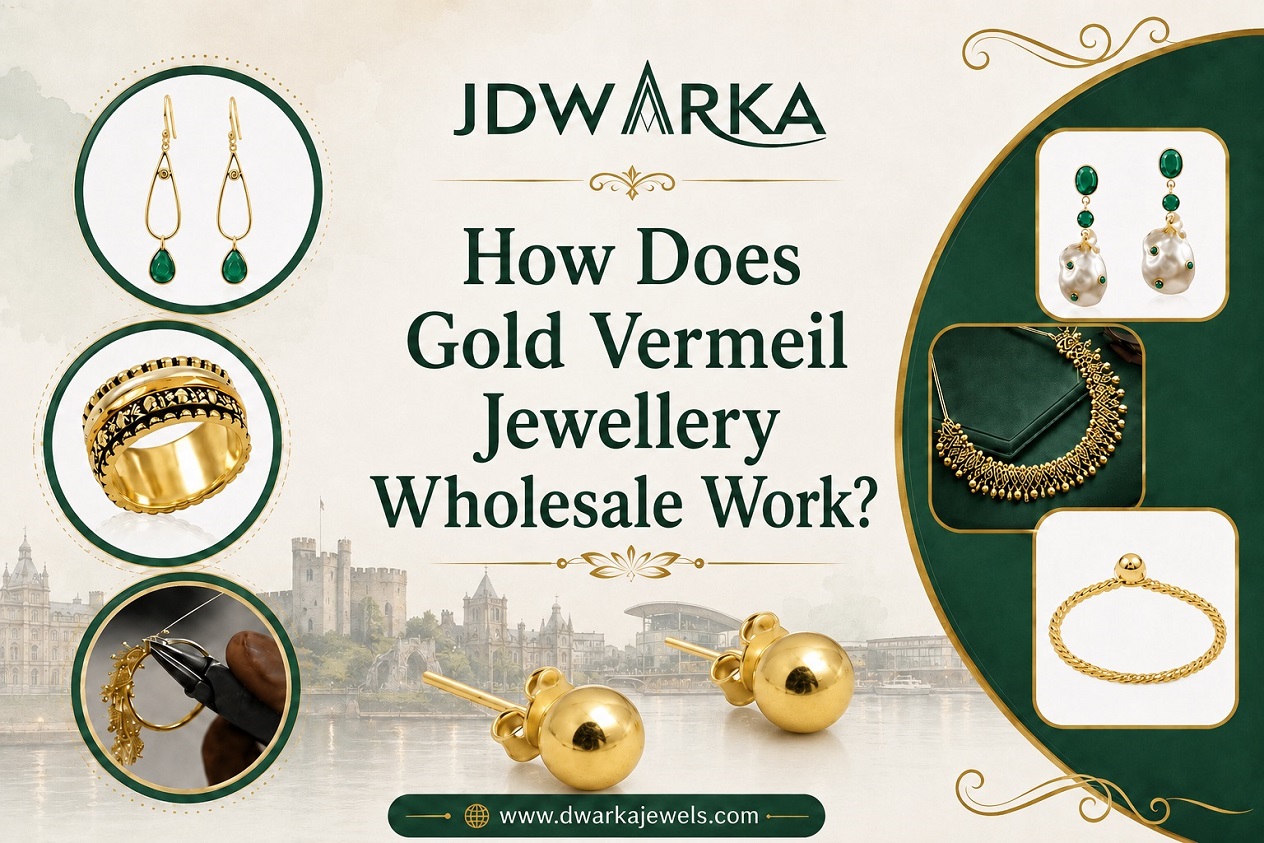
A shop owner I once spoke to put it bluntly: her customers wanted gold, but her budget only stretched to silver. That tension is basically the reason this whole category exists. If you’re new to sourcing, the terminology alone can be confusing: vermeil, plated, filled, they all sound similar but mean very different things for your bottom line. So here’s a straightforward look at how the trade actually works, from the metal itself to what you should be checking before money changes hands.
What Is Gold Vermeil Jewellery Wholesale?
Gold Vermeil Jewellery Wholesale, at its core, is bulk buying of jewellery where a sterling silver base gets a coating of real gold applied through electroplating. That’s different from gold-plated brass, and honestly, the difference trips up a lot of first-time buyers. For something to legally count as vermeil, it needs a sterling silver base underneath, plus a gold layer that meets a minimum thickness set by trade regulation. Most suppliers in this space run fairly deep catalogues: rings, chains, earrings, pendants, and many will do custom plating depth or private labelling if you ask. Minimum order sizes tend to flex too, which helps if you’re a smaller operation not ready to commit to huge volumes yet.
How the Manufacturing Process Actually Begins
Everything starts with silver. A 925-stamped sterling silver piece gets shaped first, whatever the final design calls for: a band, a stud, a link in a chain. Then it’s polished, cleaned, and dropped into an electroplating bath where a controlled current bonds gold onto the surface. Here’s what a lot of people miss, though: the thickness of that gold layer is basically the whole game. Below a certain point, usually 2.5 microns, most regulators won’t even let a manufacturer call the piece vermeil.
Why Wholesalers Keep Coming Back to This Category
Cost, mostly. Solid 14k or 18k gold eats through capital fast, and a small retailer just can’t stock much range without tying up serious money in raw metal. Vermeil gets around that problem. Same gold look, silver underneath, so the price per piece comes down a lot. That lets a shop carry more variety, react quicker when a style trends, and still keep prices where a regular customer can afford to buy. New sellers especially like this, since it gives room to test what actually sells before betting big on solid gold stock.
Sourcing Sterling Silver Rings for Women
Rings are one of those steady sellers that never really slow down. Sterling Silver Rings for Women sell across every age bracket and price point, pretty reliably, month after month. Most buyers go for a mix: a few stackable bands, a statement piece or two, some plain everyday styles. Between those three types, you cover most of what people actually walk in asking for. Worth flagging: sizing standards shift a bit depending on where a piece was manufactured, so don’t assume “size 7” means the same thing across every supplier. Go with someone who offers a broad size range per design and you’ll deal with far fewer returns.
Growing Demand for Brass Stud Earrings
Not everything needs to be silver or gold-based. A lot of shops fill out their range with Brass Stud Earrings, a cheaper, lighter option for customers who don’t want to spend much on a precious-metal item. Decent brass, coated properly, holds its shine reasonably well and fits nicely into everyday-wear lines or gift sets, especially around seasonal drops. Having this sitting alongside vermeil pieces gives a store more flexibility across price tiers.
Quality Checks Before You Confirm a Bulk Order
A handful of checks here can save real headaches down the line. Ask upfront for gold thickness in microns; that single figure tells you almost everything about how long the piece will last. Confirm the silver is actually 925, not just labelled that way on paper. If it’s a large order, get samples first and physically check them: weight, finish, how any stones sit in their settings. And ask what warranty exists on the plating, since a supplier who’s confident in their work usually won’t hesitate to back it. Skip any of this and you’re really just hoping for the best.
Understanding Pricing in Bulk Orders
Three things mostly drive the price: how much silver sits in the base, how thick the gold plating is, and how complex the design gets, particularly with stone settings or fine detailing. Tiered pricing is standard, so per-piece cost drops the more you order. Push for a full breakdown instead of accepting one flat number; that’s really the only way to compare quotes properly across different manufacturers.
Ethical and Regulatory Considerations
Where the metal comes from matters too. Suppliers willing to be upfront about silver and gold sourcing, and about following environmental standards during plating, tend to be the ones worth building a long relationship with. There’s a legal side as well, since plenty of countries regulate how the term “vermeil” can be used in marketing, and a supplier who understands that keeps you clear of labelling trouble. Beyond just staying compliant, customers ask these questions more and more themselves these days, and having a real answer ready builds a kind of trust that’s hard to fake.
Building a Long-Term Supplier Relationship
Once you land on a manufacturer worth trusting, treat that as a relationship, not a one-off deal. Stay in touch about what’s trending, what sells during which season and what feedback customers are giving. A surprising number of suppliers will co-develop exclusive designs with buyers who order regularly, which tends to be how smaller shops end up with pieces nobody else nearby is carrying.
Conclusion
At the end of the day, Gold Vermeil Jewellery Wholesale gives retailers a genuine way to offer that gold look without the price tag solid gold demands. Understanding how plating actually works, checking silver purity and gold thickness before committing, and rounding out a catalogue with rings and earrings alongside it, all of that adds up to a stronger collection that reaches more shoppers without sacrificing quality. It takes a bit more effort upfront to vet suppliers and understand pricing properly, but that effort tends to pay for itself through fewer returns and a name customers actually trust.
Frequently Asked Questions (FAQs)
Que. What is the difference between gold vermeil and gold-plated jewellery?
Ans. Vermeil needs a sterling silver base and a minimum gold thickness to qualify. Regular gold-plated jewellery can use almost any base metal, and the gold layer on it is usually much thinner.
Que. How long does the gold layer on vermeil jewellery last?
Ans. Depends on wear and care, but with a plating thickness of at least 2.5 microns, it typically holds up somewhere between one and three years before noticeable fading starts.
Que. Is vermeil jewellery safe for sensitive skin?
Ans. Usually, yes, since sterling silver sits underneath rather than a mixed base metal. Still, anyone with a known nickel sensitivity should just confirm the exact alloy with the supplier before buying.
Que. What is a typical minimum order quantity for wholesale buyers?
Ans. It really depends on the supplier. Plenty offer smaller starter minimums for new retailers, then drop the per-piece price as order size grows.
Que. Can retailers request custom designs in bulk orders?
Ans. Yes, fairly often. Many wholesale manufacturers handle custom work, private labelling included, especially for buyers who keep coming back with repeat or larger orders.