
What Makes Award Winning Custom Jewelry Special?
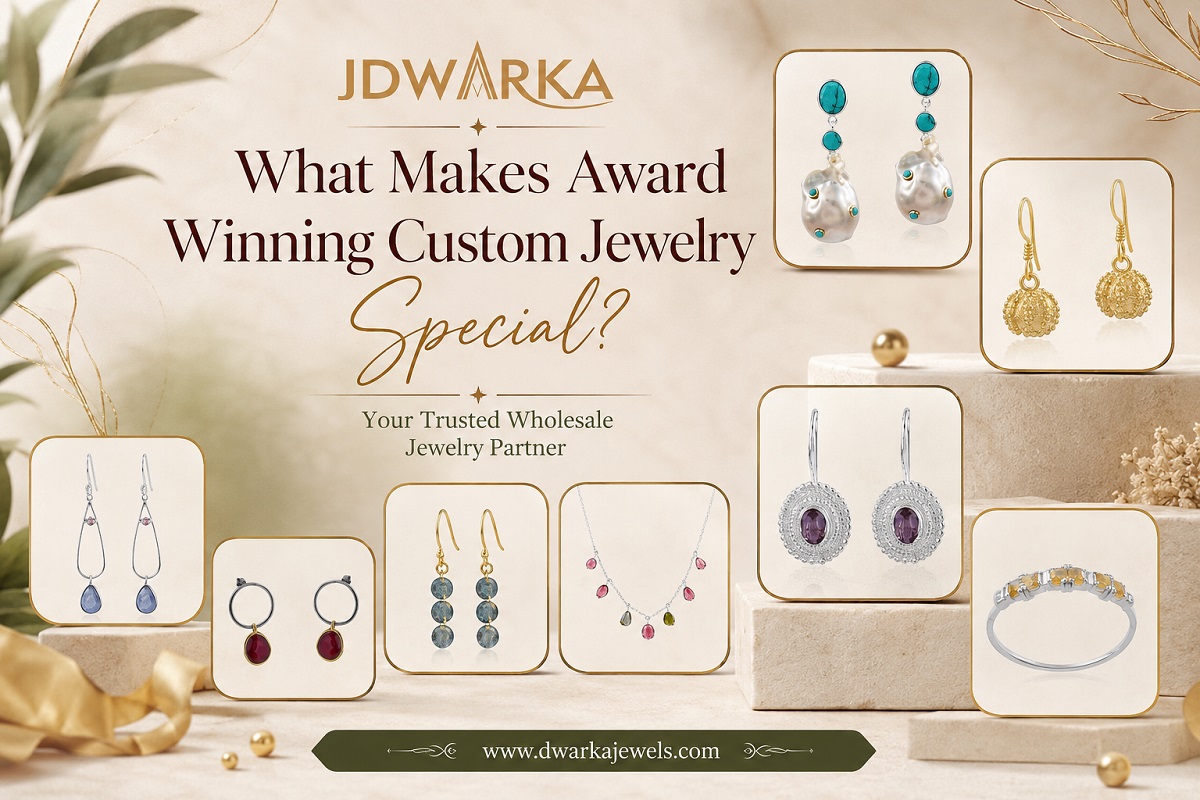
A ring is never just metal shaped around a finger. It holds a proposal, a birthday, a promise someone made to themselves after a hard year. So when a piece gets singled out publicly for its design, that recognition means something beyond a trophy on a shelf. It usually means a jeweler spent years getting the small things right before anyone noticed. That is the real difference behind Award Winning Custom Jewelry – not the label itself, but everything that had to happen quietly for the label to be earned.
Most buyers never think about what goes into a piece until they start comparing two rings that look almost identical in photos. One might have taken three days to finish. The other took three weeks, with a designer reworking the setting twice because the first version pinched the stone at an odd angle. You cannot always see that difference in a picture. You can usually feel it once the ring is on.
Story Behind Recognition in Jewelry Design
Industry juries do not hand out awards for pieces that simply look nice under studio lighting. They look at whether a design actually solves something – a stone that used to fall loose, a band that used to dig into skin, a clasp that used to snap after a year. Judges have usually made or repaired hundreds of pieces themselves, so they notice the shortcuts a casual buyer would miss entirely. A designer who wins recognition has typically spent a decade or more failing quietly before anyone saw the finished, polished version.
Craftsmanship That Earns Recognition
Good craftsmanship rarely looks impressive while it is happening. It looks like a jeweler filing the same prong for the fourth time because the third attempt left a hairline gap. It looks like someone weighing a band on a small scale, adjusting it by less than a gram, because anything heavier would feel wrong on the hand within a week. None of this shows up in a listing photo. What shows up instead is a ring that sits flat instead of twisting, a setting that holds a stone without extra bulk of metal underneath it.
There is a practical payoff to all this fussing too. Pieces built this carefully tend to survive resizing, survive a dropped-on-tile-floor moment, survive years of being worn without a second thought. Jewelers whose work holds up this way are usually the same ones who eventually get noticed, since durability and good design tend to travel together more often than people assume.
Services Behind an Award Winning Custom Jewelry Order
A ring that wins recognition rarely starts as a finished object. It starts as a conversation – what the client wants, what they can spend, whether the piece needs to survive a hospital job or a desk job. From there, most reputable studios sketch a concept, sometimes by hand, sometimes on screen, before moving into wax modeling so the client can hold something close to the real shape before it is cast. Stone sourcing and certification checks usually happen alongside this, along with promises about resizing or repair later on. It is this full chain of work, not just the final photograph, that tends to separate a known studio from a smaller workshop still finding its footing.
Elegance of a Pure Silver Ring for Women
Silver does not shout the way gold sometimes does. A Pure Silver Ring for Women sits close to the hand without asking for attention, which is probably why it never really goes out of fashion across age groups or occasions. Designers with award recognition often reach for silver during early experiments because it is forgiving to work with and inexpensive enough to allow real trial and error. A plain silver band, finished properly, can carry the same precision as a diamond-heavy piece – the difference is just in how quietly that precision is expressed.
Role of a Jaipur Gemstone Earring Supplier India in Custom Design
Where a stone comes from matters more than most buyers realize. A Jaipur Gemstone Earring Supplier India typically works straight with cutters and certified dealers, which usually means fewer inclusions and steadier color across a pair of stones. Jaipur has been trading gems for generations, long enough that the skill of matching two stones for symmetry, or cutting one to catch light evenly, is almost inherited rather than taught from scratch. A designer working closely with a supplier like this ends up with a level of consistency that a factory line simply cannot offer, no matter how advanced the machinery.
Why Certification and Awards Matter
A certificate is not a decoration. It is a written record that someone checked the metal purity, traced the stone’s origin, and in some cases confirmed how it was sourced. That paper trail protects a buyer years later if a piece needs to be insured, resold, or passed down. Awards work a little differently but land in the same place – they are judged by people who have spent decades with their hands on metal and stone, so their approval is a second, independent check beyond anything printed on a certificate.
This paperwork often gets treated as an afterthought, which is a mistake. A jeweler who keeps proper documentation is usually building trust for the long run, not just closing one sale. And a buyer holding that same documentation has something to fall back on if a piece is ever questioned, whether during a family dispute or an insurance claim years down the line.
Choosing the Right Custom Jewelry Partner
Picking a jeweler for something custom is not a decision to rush. Look at their past work closely, not just the hero shots. Ask directly how stones are sourced and what happens if something needs repair five years from now. A jeweler who is comfortable walking through material costs and labor time without getting defensive is usually someone worth trusting, award or no award.
Conclusion
None of this is really about trophies. It is about the years of small corrections that happen before a piece ever reaches a customer’s hand – the reworked prong, the resized band, the gemstone matched twice until the pair looked right side by side. Whether someone is buying a plain silver band or a pair of earrings sourced from a region with generations of gem trading behind it, the value sits in that unseen process. Buyers who take the time to ask about sourcing, certification, and after-sale care usually end up far happier with what they wear years later than those who only looked at the price tag.
Frequently Asked Questions (FAQs)
Que. What actually makes a piece of jewelry eligible for an industry award?
Ans. Judges tend to look at whether a design solves a real problem – comfort, durability, wearability – rather than judging purely on how it photographs.
Que. Is a silver ring sturdy enough for everyday wear?
Ans. Generally yes, provided it is alloyed and finished properly, though it will need occasional polishing since silver tends to dull faster than harder metals.
Que. How does a buyer confirm that gemstones were sourced ethically?
Ans. Ask for origin documentation directly. A supplier with nothing to hide will usually share this without hesitation or vague answers.
Que. Is custom jewelry always more expensive than something bought off a shelf?
Ans. Not always. Pricing depends on design complexity and materials, and the better fit and craftsmanship often make custom work a stronger long-term value.
Que. How long does a custom order usually take from start to finish?
Ans. It varies with complexity, but most pieces take somewhere between two and six weeks from the first conversation to final delivery.