
Why Buy Wholesale Sterling Silver Jewellery from Jaipur?
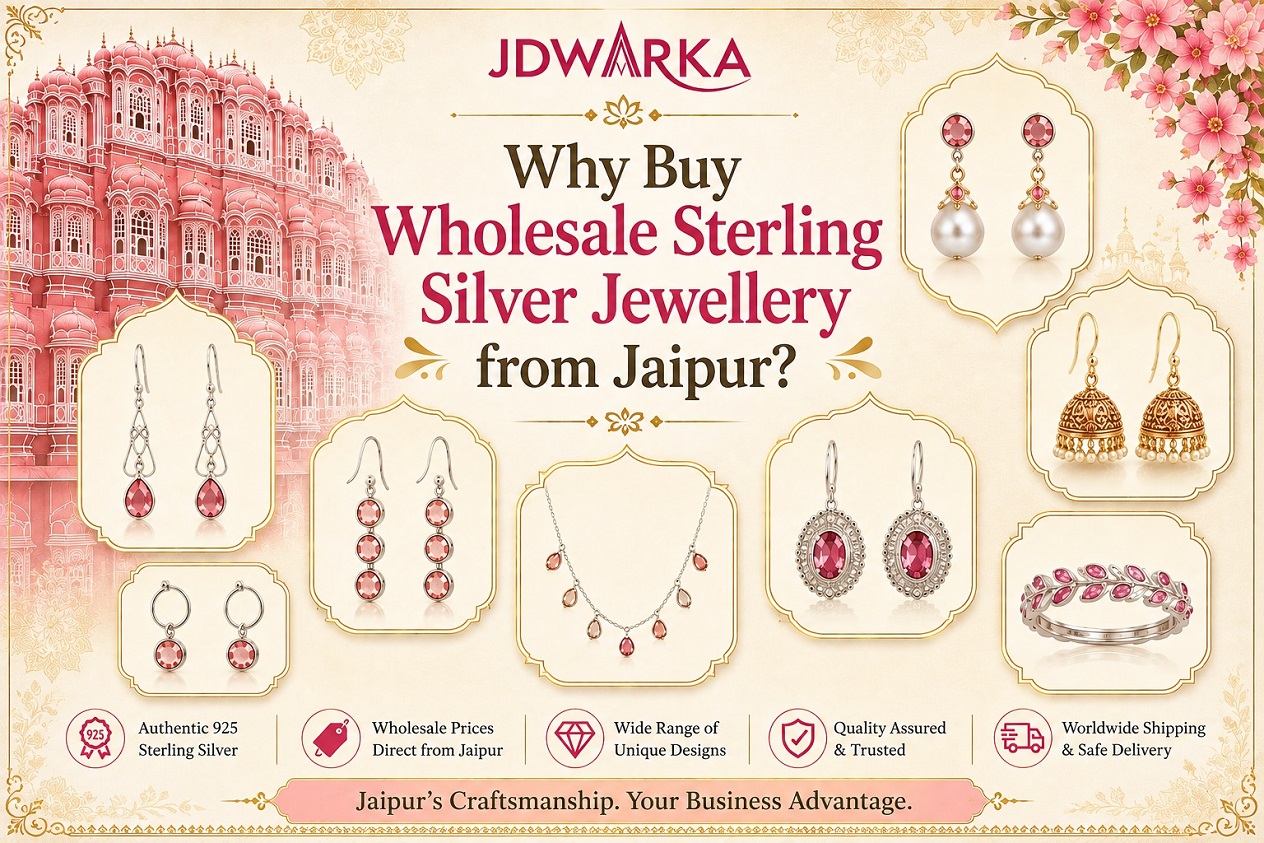
If you’ve spent any time in the jewellery sourcing world, you’ve probably heard Jaipur’s name come up more than once. It’s not a coincidence, and it’s not marketing either. The city has been making metal jewellery for a very long time, and the people doing the work today mostly learned it from someone in their own family, not from a manual. That’s really the foundation underneath Wholesale Sterling Silver Jewellery From Jaipur, a trade that supplies retailers, small designers, and exporters in far more places than most buyers realise. Below, a look at what actually drives this trade, and a few practical things worth knowing before placing a bulk order.
Jaipur Didn’t Just Adopt Jewellery Making, It Grew Around It
The city’s connection to metalwork goes back to royal patronage in the 1700s and 1800s, when skilled metalworkers, gem cutters, and enamellists were drawn into Jaipur and stayed. Their techniques didn’t get written down anywhere formal. They got taught at home, father to son, sometimes uncle to nephew. So when you look at a piece made in Jaipur today, a lot of the finishing work traces back to skills that were never taught in a classroom at all. That’s part of why hand-finished Jaipur silver tends to look a little different from something that came purely off a production line elsewhere.
What Sterling Silver Actually Is
It’s worth pausing on the material itself before getting into sourcing. Sterling silver is 92.5% pure silver combined with 7.5% of another metal, almost always copper. Pure silver by itself is soft, too soft really, for jewellery that gets worn daily; it dents and loses its shape quickly. Copper toughens it up without taking away the shine, which is why it works so well for rings, bangles, earrings, anything meant to hold up over time. The “925” stamp you’ll see on hallmarks or invoices is just referring to this same purity number.
Where 925 Silver Rings Wholesale India Fits Into the Picture
Rings account for a large share of India’s silver export volume, so it helps to unpack 925 Silver Rings Wholesale India as an actual service, not just a category on a price list. On the production side this typically includes bulk casting of standard patterns, custom die-striking when a brand has its own design, hand-finishing for anything with stones set into it, and a quality check before the shipment leaves. Most manufacturers with an established export history will also work with mixed-size lots, let a buyer approve a sample before the full run begins, and provide hallmark certification per piece. Because of that setup, a small boutique ordering fifty rings and a large chain ordering ten thousand can both work through essentially the same production process, just at different volumes.
Why Jaipur Over Other Cities
India has more than one city producing silver jewellery, so the question of why Jaipur specifically is a fair one. Part of the answer is geography. Artisans, casters, stone setters, and polishers are all clustered close together here, so an order doesn’t lose time being shipped between distant workshops. The gem and bead markets sit right alongside the jewellery districts too, which matters when a design combines silver with semi-precious stones; there’s no need to pull materials from three separate states. And after decades of exporting, manufacturers here have gotten fairly fluent in the paperwork, packaging, and hallmarking requirements that often slow down first-time overseas buyers working with less experienced suppliers.
Traditional Craft, Contemporary Shapes
Something worth pointing out is how Jaipur’s workshops have adjusted to modern fashion demand without really dropping older techniques. Filigree work, meenakari enamel, oxidised finishing- these are old, but they’re now turning up on shapes that actually sell well internationally. This shows up clearly in Trendy Earrings Traditional pieces, where hoop and drop earring bases carry patterns pulled from Rajasthani temple carving or Mughal floral motifs, just made lighter and easier to wear day to day. The result photographs well for a modern storefront, yet it still has something recognisable underneath it. That combination is a fair part of why these designs keep doing well across both domestic and export catalogues.
On Pricing
Cost is a real consideration for any wholesale buyer, and Jaipur tends to work in a buyer’s favour here. Skilled labour costs less than in a lot of Western manufacturing centres, and with so many competing workshops in one place, quoted prices generally stay reasonable. Buyers who source directly from manufacturers, skipping several layers of middlemen, usually end up with better margins as a result. Still, price shouldn’t be looked at on its own. A cheaper piece only makes sense if the hallmarking, the finish, and the durability actually match what your customers are going to expect from it.
Hallmarking, and Why It’s Not Optional
India’s hallmarking system, overseen by the Bureau of Indian Standards, exists to stop buyers from being misled about purity. A hallmark confirms that the silver has actually been tested and meets its stated standard, usually 925. For wholesale buyers, a manufacturer that hallmarks as a default practice, rather than only when someone specifically asks, is generally a decent sign of consistent quality control. It’s reasonable to ask any new supplier for their hallmarking certificate directly, and where it’s possible, to send a sample batch for independent testing before agreeing to a larger order.
A Few Things to Check Before Ordering
Minimum order quantities differ a lot between small workshops and bigger export houses, so that’s worth confirming early on. It also helps to ask about production time separately from shipping time, since suppliers sometimes bundle the two together in a way that hides how long the actual manufacturing takes. Ask for real photographs or samples in the exact style being ordered, not a general portfolio that might not reflect what actually arrives. And settle payment terms and advance amounts before production starts rather than after, since these vary quite a bit from one supplier to the next.
Conclusion
None of this is really accidental. Jaipur’s role in the silver trade comes out of a long craft history, a tight cluster of specialised workshops, and manufacturers who’ve figured out how to serve both traditional taste and modern retail demand at the same time. Anyone deciding where to source sterling silver from would do well to understand the material itself, how hallmarking works, and the basic steps involved in placing an order; that matters just as much as the city’s reputation does. Done with some care, sourcing from Jaipur offers a combination of craftsmanship, variety, and cost efficiency that’s genuinely difficult to find elsewhere.
Frequently Asked Questions (FAQs)
Que. What does the 925 stamp on silver jewellery mean?
Ans. It means the piece is sterling silver, made up of 92.5% pure silver and 7.5% of another metal, usually copper, added mainly for strength.
Que. Can silver jewellery from Jaipur be exported to Western markets without complications?
Ans. For the most part, yes. Many Jaipur manufacturers already export to the US, UK, and Europe, so they’re familiar with the packaging, documentation, and hallmarking those markets require.
Que. What counts as a normal minimum order quantity for wholesale silver jewellery?
Ans. It really depends on the manufacturer. Smaller workshops might accept a few dozen pieces, while larger export units often need orders in the thousands. Best to confirm this directly with the supplier.
Que. How can a buyer confirm silver purity before committing to a bulk order?
Ans. Ask for the hallmarking certificate, and if it’s an option, send a sample piece off for independent purity testing before the full order is placed.
Que. Are traditional jewellery designs still selling, or has everything moved toward minimal styles?
Ans. Both, actually. A lot of buyers are now asking for traditional motifs reworked into lighter, simpler shapes, which is why hybrid designs mixing heritage patterns with modern wearability have become fairly popular recently.