
What Makes Jaipur Jewelry Wholesale Unique?
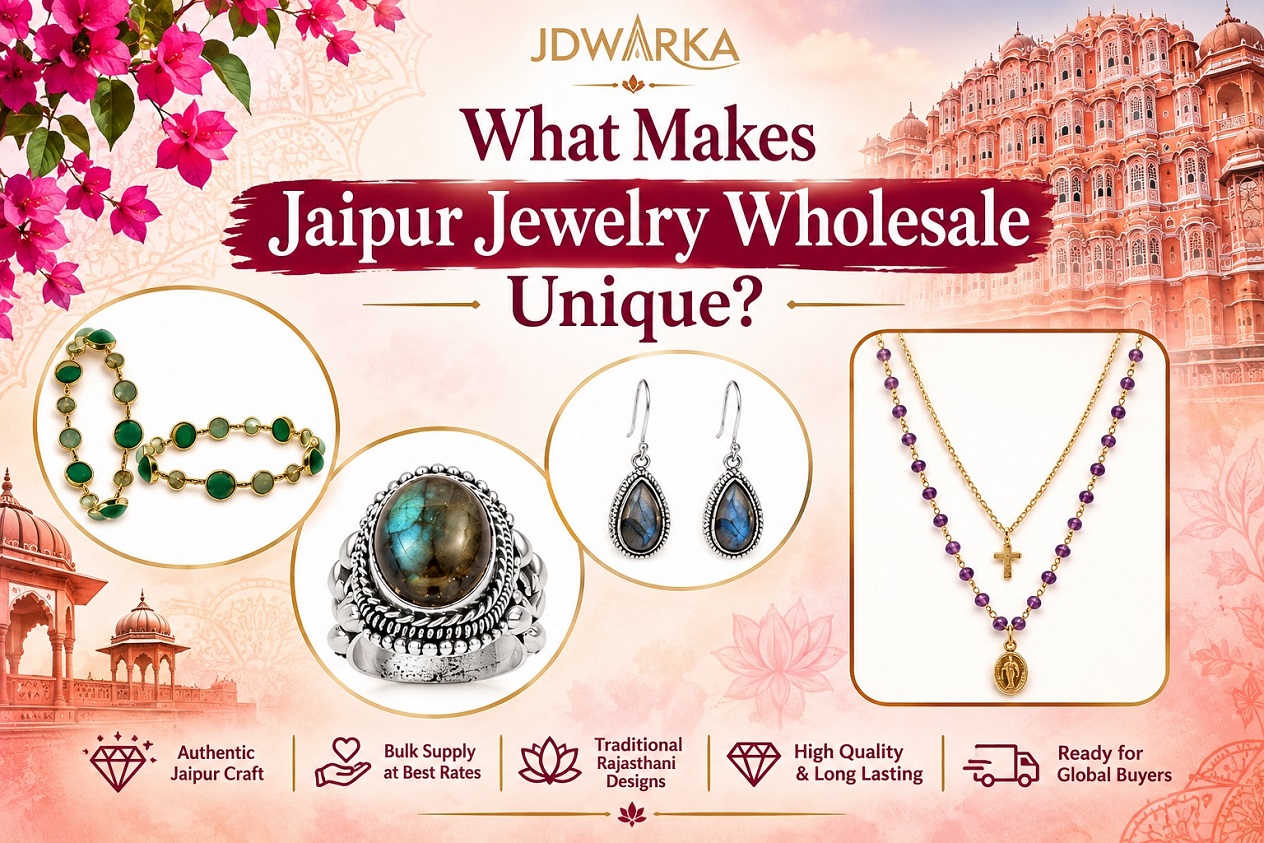
There’s a particular sound you hear walking through the old lanes of Jaipur – small hammers tapping against metal, somewhere behind a half-open shutter. Nobody’s putting on a show for tourists. This is just what a normal Tuesday looks like for the artisans who’ve been doing this work since they were teenagers. That routine, unpolished and repetitive as it is, is a big reason retailers keep coming back to Jaipur Jewelry Wholesale instead of looking elsewhere, even with online sourcing now just a few clicks away.
How Jaipur Ended Up Running This Trade
Nobody planned this out on paper decades ago. Jaipur happened to sit near stone-mining areas in Rajasthan, and slowly, cutters and polishers and setters all drifted into the same few neighborhoods. Johari Bazaar still carries that history in its street names, honestly – lanes named for the exact trades once practiced there. Because the raw material and the people who know what to do with it never really separated, a stone can travel from rough to finished piece without leaving the city. That’s not something every sourcing hub can claim.
What Suppliers Are Actually Doing Behind the Scenes
A lot of people picture a wholesaler as someone who just buys finished stock and resells it for more. That’s rarely the full picture in Jaipur. Suppliers working in Jaipur jewelry wholesale spend a fair amount of time dealing directly with artisan families, inspecting stones before they’re set, going back and forth on pricing with multiple small workshops, then sorting out packing and shipping once everything’s ready. Quite a few also take on custom requests – someone sends a sketch, or even just a photo pulled from Pinterest, and it gets handed to a karigar who figures out how to make it real. All that coordination is really what saves a retailer from having to chase down five different workshops on their own.
Old Techniques, Newer Shapes
People sometimes assume a city known for tradition only makes traditional-looking jewelry. Not really the case here. Local designers keep an eye on what’s trending internationally, at trade shows, in fast fashion. Take the Hexagon Shaped Ring – sharp edges, minimal, nothing like the rounded floral pieces most people picture when they think of Rajasthani jewelry. It’s a little unexpected, seeing that kind of design come out of workshops that still rely on centuries-old hand techniques. But that’s more or less how it works – old skills, applied to whatever shape happens to be selling this season.
Handling Big Orders Without Everything Falling Apart
Retailers don’t usually want two or three pieces. They need enough for a full shelf, or a catalog shoot, all matching in size and finish. This is exactly where a lot of smaller workshops elsewhere start to struggle – great at making one gorgeous piece, not so great at making three hundred that all look the same. Jaipur’s setup leans toward repeat production instead. Ask around for Wholesale Earrings in Bulk and you’ll usually find sizing holds steady from the first pair through the last, and timelines don’t fall apart just because the order got bigger.
Materials on Offer
Silver and brass make up most of what gets produced here, though gold-plated and rose gold finishes have picked up quite a bit of demand over the last several years. Some buyers want oxidized silver, particularly for bridal or festival collections – it has that rustic, slightly aged look people associate with tradition. Others go for polished brass with stones set into it, which suits fast fashion or costume lines better. Since workshops here cover both ends of that range, one supplier might sell to a bridal boutique this month and a trendy online store the next.
Why the Pricing Tends to Work Out
Cost usually decides where a retailer ends up sourcing from, and it’s a fair concern. Jaipur has an edge here mostly because nothing needs to be imported halfway through production – material, labor, and finishing all stay local. That doesn’t mean corners get cut on quality, either. It just means the margins tend to leave more room for retailers who need to mark things up and still hold a competitive shelf price.
Relationships That Outlast a Single Order
What stood out to me while looking into this trade is how much of it runs on relationships that stretch across years, not just single transactions. Once a retailer finds a workshop that delivers what it promises, they usually don’t go shopping around every season for something cheaper. Plenty of businesses in Jaipur jewelry wholesale have worked with the same overseas buyers for ten years or more, adjusting order sizes and designs as those buyers’ own businesses grew. That kind of trust doesn’t build overnight, and it’s genuinely hard to fake.
Conclusion
None of this came together by accident. Jaipur’s strength in jewelry sourcing rests on generations of hands-on skill, a supply chain that’s stayed local instead of scattering across cities, and artisans who keep adapting old techniques to whatever’s trending now. Whether someone wants a modern hexagon shaped ring or needs to stock up on wholesale earrings in bulk for a growing store, this city still offers a mix of craftsmanship, scale, and reliability that’s hard to find in many other places. Understanding why the trade runs the way it does here is usually the first real step toward sourcing smarter.
Frequently Asked Questions (FAQs)
Que. Why do retailers keep sourcing from Jaipur instead of buying closer to home?
Ans. Because the whole process, from raw stone to finished piece, happens within the same city, which keeps quality steady and costs lower than places that need to bring in materials or labor from elsewhere.
Que. What does this market usually produce in large quantities?
Ans. Rings, earrings, bangles, and necklaces in silver and brass are the most common, though gold-plated and stone-set pieces have grown more popular in recent years.
Que. Is this trade only open to large retailers, or can smaller businesses order too?
Ans. Minimum order sizes differ from workshop to workshop, but plenty of suppliers will work with smaller retailers, especially once there’s some trust built up.
Que. How do buyers check quality before placing a bigger order?
Ans. Most ask for a sample batch first, so they can look over the finishing and stone setting before committing to a full run.
Que. Is the jewelry still handmade, or has it all shifted to machines?
Ans. Hand techniques like kundan setting and meenakari enamelling are still very much in use, though machines now take care of repetitive work like basic polishing when order volumes get large.