
Why Work with Custom Jewelry Manufacturers?
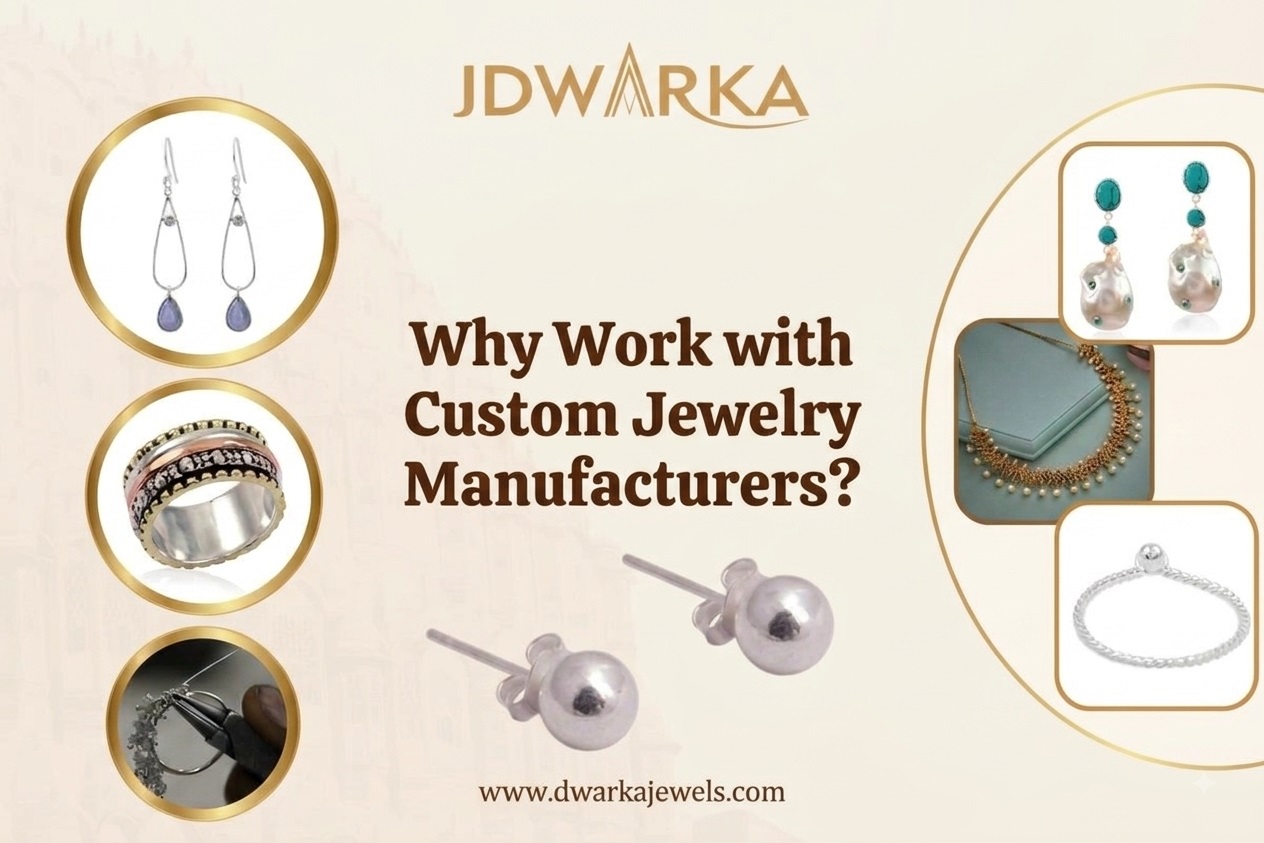
Businesses that develop their own jewellery lines often end up at a point where the usual ready-made stock just does not match what they need. Then, working with manufacturers who can produce jewellery to very specific designs starts to feel like the logical step. With custom production there is more control over the materials, proportions, surface finishes, and overall quality, in a way that purchasing off-the-shelf cannot really replicate. When you understand what this approach brings, brands and retailers are better able to judge whether it fits their day-to-day operations and creative aims.
There are a few drivers that make custom manufacturing a more structured decision rather than only a creative preference. Things like design ownership, dependable material consistency, the ability to scale up output, and tighter quality oversight. The next sections break down these points in detail, so the benefits are clearer from multiple angles.
Design Control and Brand Differentiation
One of the primary reasons for engaging specialists lies in the ability to realise original designs. Brands that wish to establish a distinct visual identity require pieces that are not widely available from general wholesale catalogues. Custom processes begin with technical drawings, prototypes, or digital models that define exact proportions, stone placements, and surface treatments.
This level of specification supports differentiation in competitive markets. When a design is produced exclusively for one client, the resulting jewellery carries a clearer association with that brand. Revisions can be made at the prototype stage, reducing the risk of large-scale production that fails to meet aesthetic or functional expectations. Working with Custom Jewelry Manufacturers enables this iterative development while maintaining commercial viability.
Material Specification and Consistency
Custom arrangements allow precise definition of metal standards and gemstone parameters. For silver items, the 925 sterling standard can be stipulated along with requirements for alloy behaviour, surface finishing, and any additional plating. Consistency across production runs becomes more achievable when the manufacturer operates under agreed material protocols.
India has a long-established infrastructure for silver jewellery production. Buyers seeking volume output in defined styles frequently explore options connected to this supply base. 925 Silver Rings Wholesale India arrangements, when structured through custom manufacturing rather than open stock, permit tighter control over ring shank thickness, stone setting security, sizing accuracy, and finishing uniformity. Such control reduces variation that can appear when sourcing from multiple unrelated suppliers.
Product Category Expertise and Technical Capability
Different jewellery categories present distinct technical demands. Earrings, for example, require reliable posts or hooks, balanced weight, and secure stone retention. When gold vermeil is specified—typically a sterling silver base with a substantial layer of gold—the thickness and adhesion of the gold layer become critical quality variables.
Gold Vermeil Earring Wholesale production benefits from manufacturers who understand both the structural requirements of earrings and the process controls needed for consistent vermeil application. Custom collaboration allows buyers to define minimum gold thickness, surface preparation standards, and acceptable tolerance levels. This specificity supports more predictable performance once the earrings reach end customers.
Quality Oversight and Process Transparency
Custom manufacturing relationships usually have defined inspection points, and it can feel a bit procedural, even if everyone understands what’s coming. Prototypes may be reviewed first, before the bulk production starts, and during actual production, checks for dimensional accuracy, surface quality, stone security, and functional performance can be agreed ahead of time. When those stages are written down clearly, it helps accountability, because people can point to what was expected.
Also, transparency about production methods, subcontracting practices, and material sourcing gives more context for informed decision-making. Buyers who understand how their designs are executed tend to be better placed to anticipate lead times, spot possible risks, and keep consistent standards across repeat orders.
Scalability and Order Flexibility
A manufacturer used to custom work can usually handle both smaller development runs and bigger commercial quantities, depending on the setup. This kind of flexibility lets brands evaluate designs in limited volumes before they commit to higher numbers. Then once a design is approved, ramping production becomes more about capacity planning than about redesigning the whole thing.
Scheduling lead times, minimum order quantities, and the ability to blend multiple designs within one production cycle all affect day-to-day efficiency. If everyone communicates clearly about those items from the start, later friction is usually reduced. Manufacturers that manage these moving parts well support more reliable inventory planning for their clients.
Intellectual Property and Supply Security
Original designs are commercial assets. Custom manufacturing agreements can include clauses that constrain the making of those same designs for other clients, in practice. While the legal framework differs by jurisdiction, it helps when the contract language is explicit and consistent, because it gives a basis for protecting design exclusivity.
Supply security also improves when a manufacturer grasps the actual requirements behind a client product line. Ongoing collaboration develops familiarity with quality levels, presentation expectations, and dialogue preferences. That familiarity reduces the fluctuation that can happen when shifting between unrelated suppliers over time.
Cost Structure and Long-Term Value
Custom production is not automatically the lowest cost route for every item, because the development phase, tooling, and repeated prototype iterations quietly bump the initial outlay. In practice it can feel like more work up front, and that matters. Still, if you look across multiple production cycles, the capability to steer away from unsuitable stock, cut losses tied to defects, and keep design coherence can raise the overall value.
Unit costs usually drop as volumes rise, and as processes stabilise. Buyers who treat custom manufacturing with realistic volume projections and with clear specifications tend to land better cost outcomes later on. Comparing the total cost of ownership, including quality failures and the administrative effort, gives a more faithful picture than the unit price alone.
Practical Considerations for Collaboration
Successful custom projects rely on pretty precise communication, though. Technical drawings, reference samples, and written specifications reduce ambiguity, not later in the process. When everyone agrees on the approval stages, acceptable tolerances, and how defects get classified, you avoid misunderstandings during production.
Geographic and logistical factors also weigh in. Time zones, shipping routes, import rules, and payment terms influence how smooth the relationship feels. Buyers who look at these operational pieces beside technical capability get a clearer, more complete view of whether the fit is suitable.
Conclusion
Working together with specialists in custom production gives you some helpful order in design control, material consistency, quality checking, and the ability to scale up later. It really supports brands that need distinctive pieces and dependable execution, instead of leaning on open wholesale stock.
When you work with Custom Jewelry Manufacturers, you can state the standards clearly and then iterate toward the finished idea for your original designs. Things like 925 Silver Rings Wholesale India can benefit a lot from tighter control over dimensions, the surface finishing, and the secure setting when it is handled through custom specs. Gold Vermeil Earring Wholesale production also benefits because you can define the parameters for gold thickness, how well it bonds, and how the structure holds up over time. If you set clear expectations and keep the process visible, buyers end up with a better chance of receiving jewellery that satisfies both the creative side and the commercial side, at once.
Frequently Asked Questions (FAQs)
Que. What is the main advantage of custom manufacturing over buying ready-made stock?
Ans. Custom manufacturing allows exact control over design, materials, and quality standards, supporting brand differentiation and greater consistency across production runs.
Que. How does custom production improve material consistency?
Ans. Buyers can specify alloy standards, finishing requirements, and gemstone parameters in advance. Manufacturers then produce to those defined criteria rather than offering variable open stock.
Que. Why is process transparency important in custom jewellery manufacturing?
Ans. Clear visibility into production stages, inspection points, and material sourcing helps buyers anticipate lead times, manage risk, and maintain agreed quality levels.
Que. Can custom manufacturers handle both small development runs and larger orders?
Ans. Many can. The ability to move from prototypes to scaled production under the same specifications supports testing and subsequent commercial volume.
Que. What should be defined before starting a custom jewellery project?
Ans. Technical specifications, material standards, approval stages, tolerance levels, lead times, and contractual terms regarding design exclusivity form the essential foundation for a clear working relationship.